Introduction
Artificial Intelligence is no longer a concept limited to science fiction—it has become a part of everyday life. From voice assistants and smart recommendations to automated tools and digital content creation, AI is already influencing how we live and work. In 2026, generative AI tools are becoming more accessible, making it easier for children to interact with technology in new and exciting ways.
This rapid growth has led parents to ask an important question: should children start learning AI at an early age? While some see it as a valuable opportunity, others worry about complexity and overexposure to technology. Understanding what generative AI really means for kids and how it can benefit them is essential for making the right decision.
Understanding Generative AI for Kids
Generative AI refers to technology that can create content such as text, images, music, and even code. Unlike traditional tools that only provide information, generative AI allows users to actively create and experiment. For children, this opens up new possibilities to explore ideas, express creativity, and build projects using smart digital tools.
However, learning AI for kids is not about mastering complex algorithms or technical details. Instead, it focuses on understanding how to use these tools responsibly and creatively. Children learn basic concepts like logic, patterns, and problem-solving while using AI to generate ideas, design projects, and explore different subjects in an interactive way.
Why AI Education is Becoming Important
The world is becoming increasingly driven by data and automation, and AI is at the center of this transformation. As industries continue to adopt AI technologies, having a basic understanding of how these systems work is becoming an essential skill. Introducing children to AI early helps them adapt to this changing environment.
AI education also encourages a new way of thinking. Children learn how to ask better questions, analyze results, and improve their ideas using intelligent tools. This ability to think critically and work alongside technology prepares them for future careers and helps them stay relevant in a rapidly evolving digital landscape.
Benefits of Learning AI at an Early Age
Learning AI at a young age offers several advantages that go beyond technical knowledge. One of the key benefits is the development of critical thinking skills. Children learn how to evaluate outputs, understand patterns, and make decisions based on information, which strengthens their analytical abilities.
Another important benefit is creativity. Generative AI allows children to create stories, design images, and develop projects in ways that were not possible before. This encourages them to experiment, explore new ideas, and express themselves more freely, boosting both confidence and imagination.
Enhancing Creativity and Innovation
Generative AI acts as a creative partner for children, helping them turn ideas into reality. Whether it is writing a story, designing artwork, or building a simple project, AI tools provide support that enhances the creative process. Children can experiment with different concepts and see immediate results, which keeps them engaged.
This ability to create and innovate at a young age builds confidence and curiosity. Instead of being passive users of technology, children become active creators who can explore their interests and develop unique ideas. This mindset is essential for success in a world that values innovation and adaptability.
Is It Too Early for Kids to Learn AI?
One of the most common concerns among parents is whether AI is too complex for children. However, modern learning platforms are designed to make AI education simple and accessible. Kids are introduced to basic concepts through interactive tools and guided activities, making learning both fun and easy.
Children do not need advanced technical knowledge to start learning AI. They begin with simple tasks that focus on creativity and problem-solving. As they grow, they can gradually explore more advanced concepts. This step-by-step approach ensures that learning remains comfortable and enjoyable.
Addressing Common Concerns
While AI offers many benefits, it is important to address the concerns associated with it. One major concern is that children might become too dependent on AI tools. If they rely only on technology, they may not develop their own thinking skills fully.
Another concern is the quality of learning. Parents want to ensure that children understand the concepts behind AI rather than just using tools without knowledge. Encouraging children to ask questions and explore how AI works can help overcome these challenges.
Importance of Balanced Learning
Balance is essential when introducing AI to children. While it is important to learn new technologies, children should also engage in other activities such as reading, playing, and social interaction. A balanced routine supports overall development.
Parents should guide children to use AI as a learning tool rather than a shortcut. Teaching them to understand the “why” behind the results helps them build deeper knowledge and use technology responsibly.
Role of Parents in AI Learning
Parents play a key role in shaping how children use AI. Even without technical expertise, they can support their children by encouraging curiosity and showing interest in their learning activities. This involvement boosts confidence and motivation.
Providing a safe and structured environment is also important. Parents can choose educational platforms, set screen time limits, and ensure that children use AI tools in a productive way. This helps children develop a healthy relationship with technology.
Preparing Kids for the Future
The future will be strongly influenced by AI and automation, making it important for children to be prepared. Learning AI at an early stage helps them understand how technology works and how to use it effectively in different situations.
By developing skills like critical thinking, creativity, and adaptability, children can stay ahead in a competitive world. AI education not only prepares them for future careers but also helps them become confident and capable individuals.
Conclusion
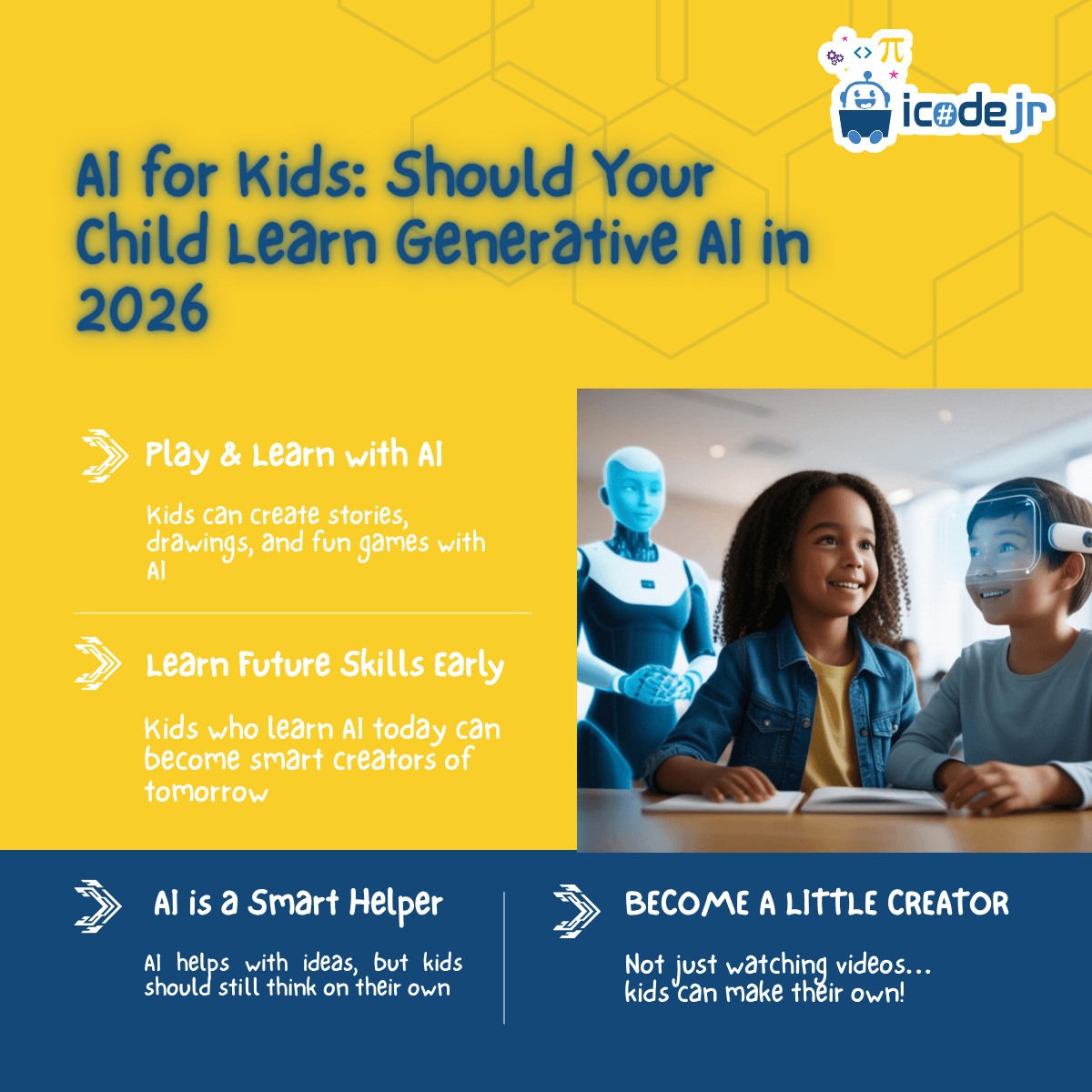
Learning generative AI in 2026 is no longer just an option—it is becoming an important part of modern education. It helps children develop essential skills while making learning more engaging and interactive.
With proper guidance and balance, AI can become a powerful tool for growth. By introducing children to AI in a simple and structured way, parents can ensure they are ready for the future while staying creative, curious, and confident.