Introduction
In today’s fast-moving digital world, screens have become an unavoidable part of children’s daily lives. From online classes to entertainment and social interaction, children are spending more time than ever on devices like smartphones, tablets, and laptops. This shift has raised an important concern among parents about whether screen time is helping or harming their child’s development.
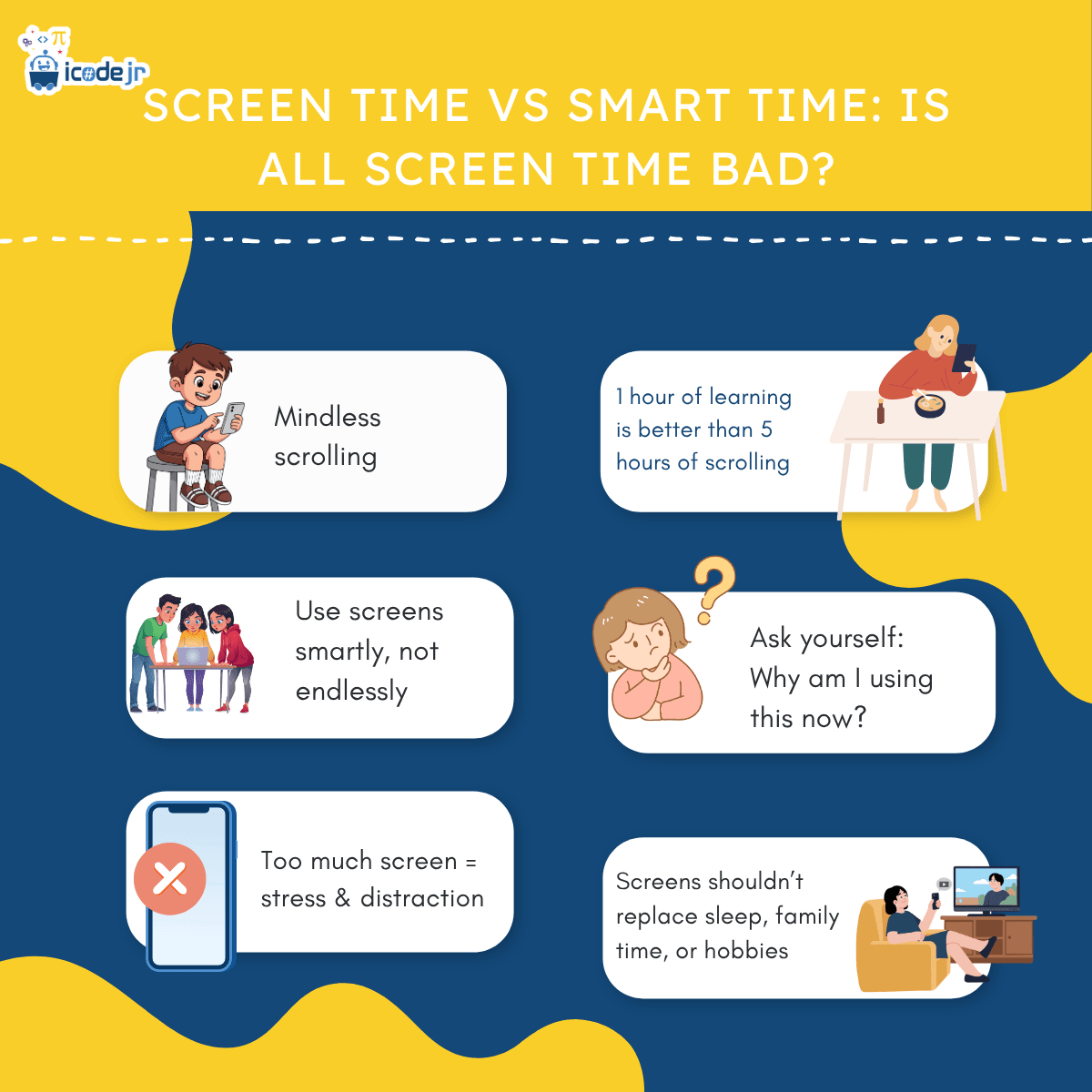
However, the real question is not about how much time children spend on screens, but how they use that time. Not all screen time is harmful, and in fact, when used correctly, it can become a powerful tool for learning and growth. Understanding the difference between passive screen time and productive screen use is the key to making better decisions for your child’s future.
Understanding Screen Time
Screen time refers to any time spent using digital devices such as televisions, computers, tablets, or smartphones. It includes a wide range of activities like watching videos, playing games, browsing social media, and even attending online classes. With technology becoming more accessible, screen time has naturally increased among children of all age groups.
However, it is important to recognize that not all screen time has the same impact. Passive screen time usually involves consuming content without much thinking or interaction, such as watching random videos for long hours. On the other hand, interactive screen time includes activities that require engagement, decision-making, and creativity, making it more beneficial for a child’s development.
What is Smart Time?
Smart time is a concept that focuses on using digital devices in a meaningful and productive way. Instead of simply consuming content, children actively engage with technology to learn new skills, explore ideas, and create something valuable. Activities like coding, learning artificial intelligence, solving puzzles, or participating in educational programs fall under smart time.
This type of screen usage transforms devices into powerful learning tools. Children are not just watching or scrolling—they are thinking, experimenting, and building. Smart time encourages curiosity and helps children develop skills that are essential for the future, making it a much more effective use of technology.
Passive Screen Time vs Smart Time
Passive screen time and smart time differ significantly in how they affect children. Passive screen time often involves activities where children are simply observers, such as watching videos or endlessly scrolling through content. While these activities may provide short-term entertainment, they do not contribute much to learning or skill development.
In contrast, smart time requires active participation. Children engage in activities that challenge their thinking, improve problem-solving skills, and encourage creativity. Instead of being consumers of content, they become creators and learners. This shift from passive to active engagement makes a significant difference in how technology influences a child’s growth.
The Impact of Screen Time on Children
Excessive passive screen time can have negative effects on children’s physical and mental well-being. It may lead to reduced attention spans, lack of focus, and decreased physical activity. Spending long hours on unproductive content can also limit social interaction and affect overall development.
On the other hand, smart time has a positive impact when used in moderation. It helps children develop important skills such as logical thinking, creativity, and problem-solving. Educational activities on screens can improve focus, boost confidence, and encourage independent learning, making screen time a valuable part of their daily routine.
Benefits of Smart Time for Kids
Smart time offers several benefits that go beyond basic learning. One of the biggest advantages is skill development. Activities like coding and educational games help children build analytical thinking and improve their ability to solve problems effectively.
Another important benefit is creativity. When children use technology to create projects, design games, or explore new ideas, they learn to express themselves in innovative ways. This not only boosts their confidence but also prepares them for future challenges in a technology-driven world.
How Parents Can Create a Healthy Balance
Managing screen time effectively is one of the biggest challenges parents face today. The goal is not to completely eliminate screen usage but to create a healthy balance between entertainment and learning. Setting clear boundaries and encouraging structured usage can help children develop better habits.
Parents can introduce a routine where children spend a portion of their screen time on educational activities and the rest on entertainment. Encouraging participation in productive platforms, monitoring usage, and discussing what children are learning can make screen time more meaningful and beneficial.
Turning Screen Time into a Learning Opportunity
Instead of viewing screens as a distraction, parents can use them as an opportunity for growth. By guiding children toward productive activities, technology can become a powerful educational tool. Platforms that offer coding, problem-solving games, and interactive lessons can help children learn while having fun.
This approach changes the way children interact with technology. They begin to see devices as tools for creativity and learning rather than just entertainment. Over time, this habit helps them develop a more responsible and purposeful relationship with digital devices.
The Future of Learning in a Digital World
As technology continues to evolve, digital skills are becoming essential for success in almost every field. From education to careers, the ability to understand and use technology effectively is a key advantage. This makes smart screen usage more important than ever.
By introducing children to productive digital activities early, parents can prepare them for future opportunities. Skills like coding, critical thinking, and creativity are not just useful—they are necessary in a world driven by innovation and technology.
Conclusion
Screen time is not the enemy—unproductive screen time is. The key lies in understanding how children use digital devices and guiding them toward activities that support learning and development. By shifting the focus from passive consumption to smart time, parents can turn technology into a valuable tool.
With the right balance and approach, screen time can become an opportunity rather than a concern. Encouraging children to engage in meaningful digital activities helps them build skills, improve focus, and prepare for the future. In the end, it is not about limiting screens but about using them wisely to support a child’s growth and success.