Introduction
In today’s digital age, technology is deeply integrated into every aspect of life, and coding has become one of the most important skills for the future. Just like reading and writing, understanding the basics of coding helps children interact with the world around them more effectively. However, introducing coding to kids can seem challenging if it is not done in a simple and engaging way.
This is where Scratch coding plays an important role. Designed especially for young learners, Scratch makes coding easy, fun, and interactive. It allows children to explore programming concepts through creativity and play, helping them build essential skills such as logical thinking, problem-solving, and imagination from an early age.
What Is Scratch Coding
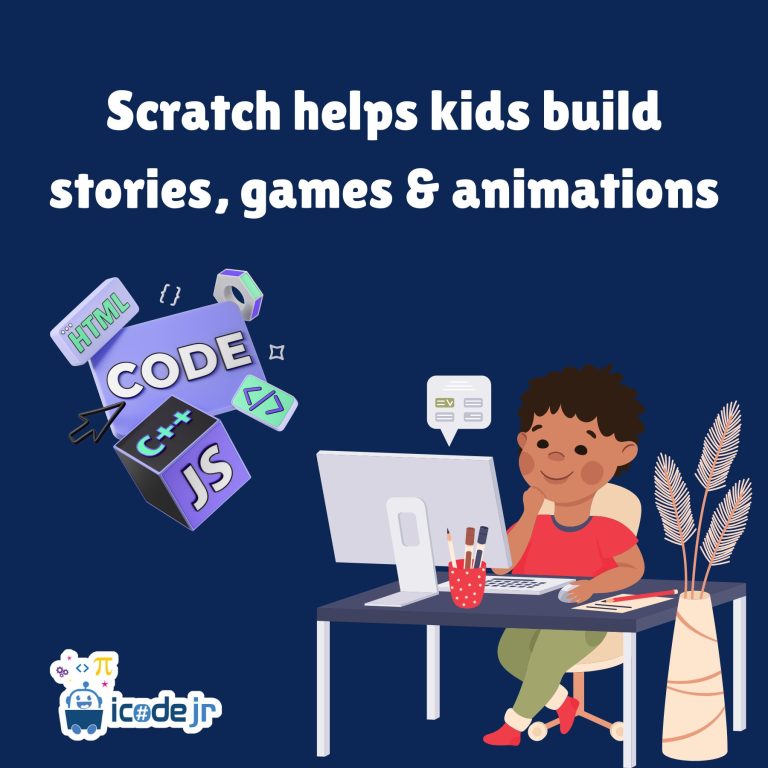
Scratch is a visual programming platform that allows children to create stories, animations, and games using simple drag-and-drop blocks. Instead of typing complex code, kids can connect colorful blocks that represent different commands, making it easy for them to understand how programming works.
This approach removes the fear of making mistakes, as there are no complicated syntax rules to follow. Children can focus on learning concepts and experimenting with ideas, which makes the learning process enjoyable and stress-free. Scratch serves as a perfect introduction to the world of coding.
Why Scratch Is Perfect for Beginners
Scratch is designed with beginners in mind, making it ideal for children who are just starting their coding journey. The platform is simple to use and visually appealing, which helps young learners stay engaged and interested. It introduces coding concepts in a playful way, allowing kids to learn without feeling overwhelmed.
Another reason Scratch is perfect for beginners is that it encourages exploration. Children can try different combinations of blocks, see immediate results, and learn through trial and error. This hands-on experience helps them understand concepts more effectively and builds confidence in their abilities.
Building Logical Thinking Through Scratch
One of the most important skills children develop through Scratch is logical thinking. Coding requires breaking down problems into smaller steps and solving them in a structured way. Scratch helps children understand this process by guiding them to think step by step.
As children create projects, they learn how different commands work together to produce a result. This improves their ability to analyze situations and find solutions. Logical thinking developed through coding also supports learning in subjects like mathematics and science.
Encouraging Creativity and Imagination
Scratch is not just about coding—it is also a platform for creativity. Children can design characters, create stories, and build games based on their imagination. This freedom to create makes learning exciting and meaningful.
By combining creativity with technology, children learn how to express their ideas in unique ways. They are not limited to predefined outcomes but can explore endless possibilities. This creative approach helps them develop confidence and a strong sense of innovation.
Developing Problem-Solving Skills
Problem-solving is a key skill that children gain through Scratch coding. When they work on projects, they often encounter challenges that require them to think critically and find solutions. This process teaches them how to approach problems systematically.
Children learn that mistakes are a part of learning and that they can improve their work by trying different solutions. This mindset helps them become more resilient and confident in handling challenges, both in coding and in everyday life.
Building Confidence Through Creation
Creating projects in Scratch gives children a sense of achievement. When they complete a game or animation, they feel proud of their work. This boosts their confidence and motivates them to continue learning and exploring new ideas.
Sharing their projects with others further enhances their confidence. They receive feedback, appreciation, and encouragement, which helps them believe in their abilities. This positive experience plays an important role in their overall development.
Learning Collaboration and Communication
Scratch also encourages collaboration among children. They can share their projects, learn from others, and work together to create new ideas. This interaction helps them develop teamwork and communication skills.
Working in a collaborative environment teaches children how to express their ideas clearly and listen to others. These skills are essential for success in both academic and professional settings, making Scratch learning even more valuable.
Preparing Kids for Advanced Coding
Scratch serves as a strong foundation for learning advanced programming languages. Once children understand basic concepts like loops, conditions, and sequences, they can easily transition to languages such as Python and JavaScript.
This early exposure makes advanced coding less intimidating and more approachable. Children who start with Scratch often find it easier to learn complex topics later, giving them an advantage in their coding journey.
Real-World Benefits of Learning Scratch
The skills children gain from Scratch go beyond coding. They develop critical thinking, creativity, and the ability to adapt to new technologies. These skills are essential in today’s fast-changing world and help children succeed in various fields.
Learning Scratch also prepares children for future opportunities in areas like game development, app creation, and digital design. It gives them the confidence to explore technology and use it to create meaningful projects.
Supporting Your Child’s Learning Journey
Parents play an important role in supporting their child’s coding journey. Encouraging children to explore Scratch regularly and celebrating their achievements can boost their motivation and interest. Even small projects can make a big difference in building confidence.
Providing access to structured learning programs can also enhance their experience. Guided learning with expert mentors helps children understand concepts better and stay on track. A supportive environment ensures that children enjoy the process and continue learning.
Conclusion
Scratch coding is more than just an introduction to programming—it is a powerful tool for developing essential skills in children. It combines creativity, logic, and problem-solving in a way that makes learning fun and engaging.
By starting with Scratch, children build a strong foundation for future learning and innovation. With the right guidance and encouragement, they can transform from curious learners into confident creators, ready to succeed in a technology-driven world.